Fire Safety Tips for Businesses: Protecting Your Employees and Assets
A comprehensive guide to implementing effective fire safety practices in your commercial facility
Fire safety in commercial buildings isn't just about compliance—it's about protecting lives, preserving assets, and ensuring business continuity. Every year, thousands of businesses experience devastating fires that could have been prevented with proper safety measures. This comprehensive guide provides essential fire safety tips that every business owner and facility manager should implement.
Why Fire Safety Matters for Businesses
Annual property damage from commercial fires
Of businesses never reopen after major fire
Of fires are preventable with proper measures
The financial and operational impact of a commercial fire extends far beyond immediate property damage. Business interruption, lost revenue, employee displacement, customer trust erosion, and potential legal liabilities can cripple even well-established companies. Implementing comprehensive fire safety measures is not just a regulatory requirement—it's a critical business continuity strategy.
1. Install and Maintain Fire Protection Systems
Fire Alarm Systems
Modern fire alarm systems are your first line of defense, providing early detection that can save lives and minimize property damage. Addressable fire alarm systems offer superior detection capabilities by pinpointing the exact location of smoke or heat, enabling faster response times and reducing false alarms.
Fire Alarm Best Practices:
- Install smoke detectors in all occupied areas, storage rooms, and mechanical spaces
- Use heat detectors in kitchens, boiler rooms, and areas where smoke detectors may cause false alarms
- Ensure alarm signals are audible and visible throughout the entire facility
- Test alarm systems monthly and conduct professional inspections quarterly
- Replace detector batteries annually and entire units according to manufacturer specifications
- Integrate alarm systems with monitoring services for 24/7 emergency response
Fire Sprinkler Systems
Automatic fire sprinkler systems are proven to control or extinguish fires in 96% of cases where they operate properly. These systems provide round-the-clock protection, activating automatically when heat reaches a predetermined temperature—typically between 135°F and 165°F.
Sprinkler System Requirements:
- Conduct monthly visual inspections of sprinkler heads, pipes, and control valves
- Schedule quarterly flow tests to ensure adequate water pressure
- Perform annual comprehensive inspections by certified professionals
- Keep 18-inch clearance below all sprinkler heads
- Never paint, cover, or obstruct sprinkler heads
- Maintain detailed inspection and maintenance records
2. Develop and Practice Emergency Response Plans
A well-designed emergency response plan is critical for ensuring employee safety and minimizing confusion during a fire emergency. Your plan should be comprehensive, clearly communicated, and regularly practiced through drills.
Essential Plan Components
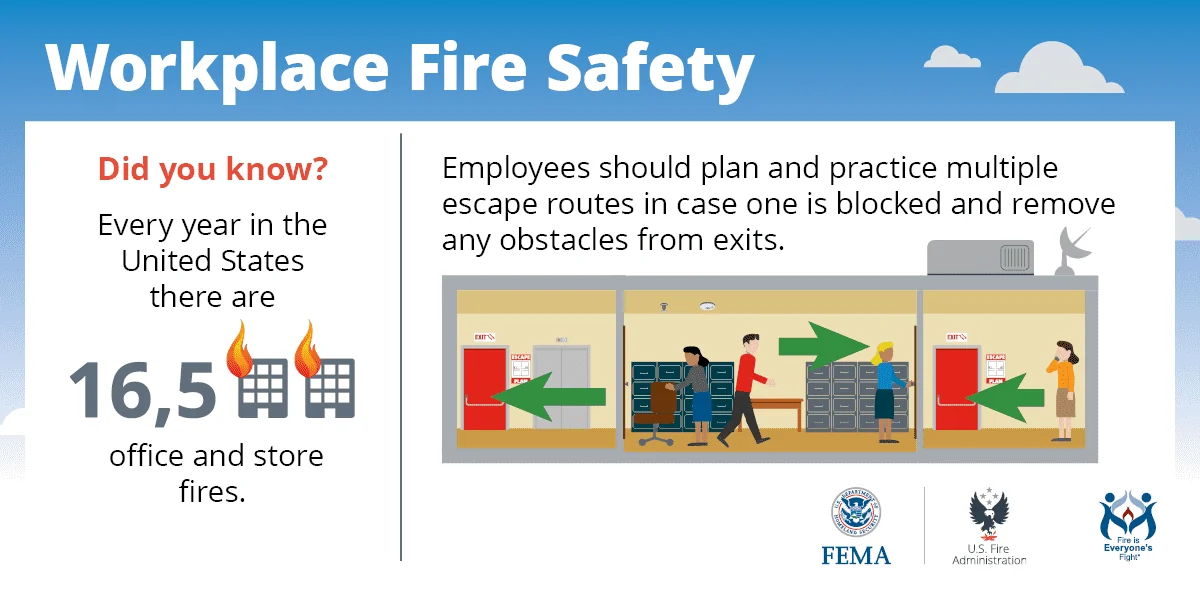
Evacuation Procedures
- • Clearly marked primary and secondary evacuation routes
- • Designated assembly points at safe distances from the building
- • Procedures for assisting employees with disabilities
- • Accountability systems to ensure all personnel have evacuated
Communication Protocols
- • Methods for alerting all employees of emergencies
- • Procedures for contacting emergency services
- • Systems for notifying management and stakeholders
- • Emergency contact lists and communication trees
Role Assignments
- • Floor wardens responsible for specific areas
- • Personnel trained to assist with evacuations
- • Designated individuals to shut down critical equipment
- • Staff assigned to account for all employees at assembly points
Conducting Effective Fire Drills
Fire drills should be conducted at least quarterly, with some jurisdictions requiring monthly drills. Vary the timing and conditions of drills to ensure employees can respond effectively regardless of circumstances. Document each drill, noting evacuation times, issues encountered, and areas for improvement.
3. Maintain Proper Fire Extinguisher Coverage
Portable fire extinguishers provide employees with the ability to suppress small fires before they escalate. However, proper selection, placement, and maintenance are critical for effectiveness.
Fire Extinguisher Classes
- Class A: Ordinary combustibles (wood, paper, cloth)
- Class B: Flammable liquids (gasoline, oil, grease)
- Class C: Electrical equipment (computers, motors, appliances)
- Class D: Combustible metals (rare in most businesses)
- Class K: Commercial cooking equipment (restaurants, cafeterias)
Placement and Maintenance
- Install extinguishers within 75 feet of any point in the building (Class A) or 50 feet (Class B)
- Mount extinguishers at accessible heights (typically 3.5 to 5 feet from the floor)
- Ensure clear visibility with proper signage
- Conduct monthly visual inspections checking pressure gauges, seals, and accessibility
- Schedule annual professional inspections and maintenance
- Train employees on proper use using the PASS method (Pull, Aim, Squeeze, Sweep)
4. Implement Good Housekeeping Practices
Many commercial fires result from poor housekeeping and accumulation of combustible materials. Establishing and enforcing strict housekeeping standards significantly reduces fire risk.
Critical Housekeeping Measures
Storage and Organization
- • Store flammable materials in approved containers and cabinets
- • Maintain minimum clearances around electrical panels, heaters, and equipment
- • Keep exits, corridors, and stairwells clear of obstructions
- • Dispose of combustible waste daily
- • Store oily rags in approved metal containers with self-closing lids
Electrical Safety
- • Inspect electrical cords regularly for damage
- • Avoid overloading outlets and extension cords
- • Ensure proper grounding of all electrical equipment
- • Schedule regular electrical system inspections by licensed electricians
- • Replace damaged or frayed cords immediately
5. Provide Comprehensive Employee Training
Your employees are your most valuable asset in fire prevention and response. Comprehensive training ensures they understand fire hazards, prevention measures, and proper emergency procedures.
Training Program Elements
New Employee Orientation
Include fire safety as a mandatory component of new hire orientation. Cover evacuation routes, alarm systems, extinguisher locations, assembly points, and individual responsibilities.
Annual Refresher Training
Conduct annual training sessions to reinforce fire safety procedures, update employees on any changes, and address questions or concerns.
Specialized Training
Provide additional training for employees with specific fire safety responsibilities, such as floor wardens, first responders, and equipment operators.
6. Conduct Regular Fire Safety Inspections
Systematic inspections identify potential fire hazards before they result in emergencies. Establish a comprehensive inspection program covering all aspects of your facility.
Inspection Checklist
Daily/Weekly
- ✓ Exit doors unlocked and accessible
- ✓ Exit signs illuminated
- ✓ Fire extinguishers visible and accessible
- ✓ Corridors and exits clear
Monthly
- ✓ Fire alarm system test
- ✓ Emergency lighting test
- ✓ Fire extinguisher inspection
- ✓ Sprinkler system visual check
Quarterly
- ✓ Fire drill execution
- ✓ Fire door operation test
- ✓ Electrical panel inspection
- ✓ HVAC system check
Annually
- ✓ Professional fire alarm inspection
- ✓ Sprinkler system comprehensive test
- ✓ Fire extinguisher certification
- ✓ Emergency plan review and update
Conclusion: Making Fire Safety a Priority
Effective fire safety requires ongoing commitment, regular maintenance, and continuous improvement. By implementing these comprehensive fire safety measures, you protect your employees, preserve your assets, and ensure business continuity.
Remember that fire safety regulations and best practices evolve. Stay informed about code changes, new technologies, and emerging threats. Partner with qualified fire protection professionals who can provide expert guidance, conduct thorough inspections, and ensure your systems meet current standards.